


CRAFT · May 2026
Raw vs Selvedge vs Sanforized: What Your Denim Is Made Of
Raw, selvedge, sanforised, understand what they mean, how they wear over time, and which to look for.
21 May 2026 · 5 min read
Denim is often a misunderstood fabric in a wardrobe. There’s been an increasing interest in the different types of denim like raw, selvedge or even where it’s sourced like Japanese denim. But it’s not always clear what makes them good, how they behave over time, and why the choices a brand makes in sourcing them matter more than the label suggests.
Raw and selvedge get used loosely when talking about denim, often interchangeably which isn’t always accurate. However, these terms can tell you how the fabric is made and will feel over time.
Raw (sometimes referred to as dry) denim refers to how the denim was finished and means the denim hasn’t been washed after dyeing. The indigo sits tight on the surface of the fibres, stiff and vivid. This means the denim shapes with you as you wear it, and creates more personalised creases. It also bleeds colour a lot more than other denim, which means the colour will also change substantially over time.
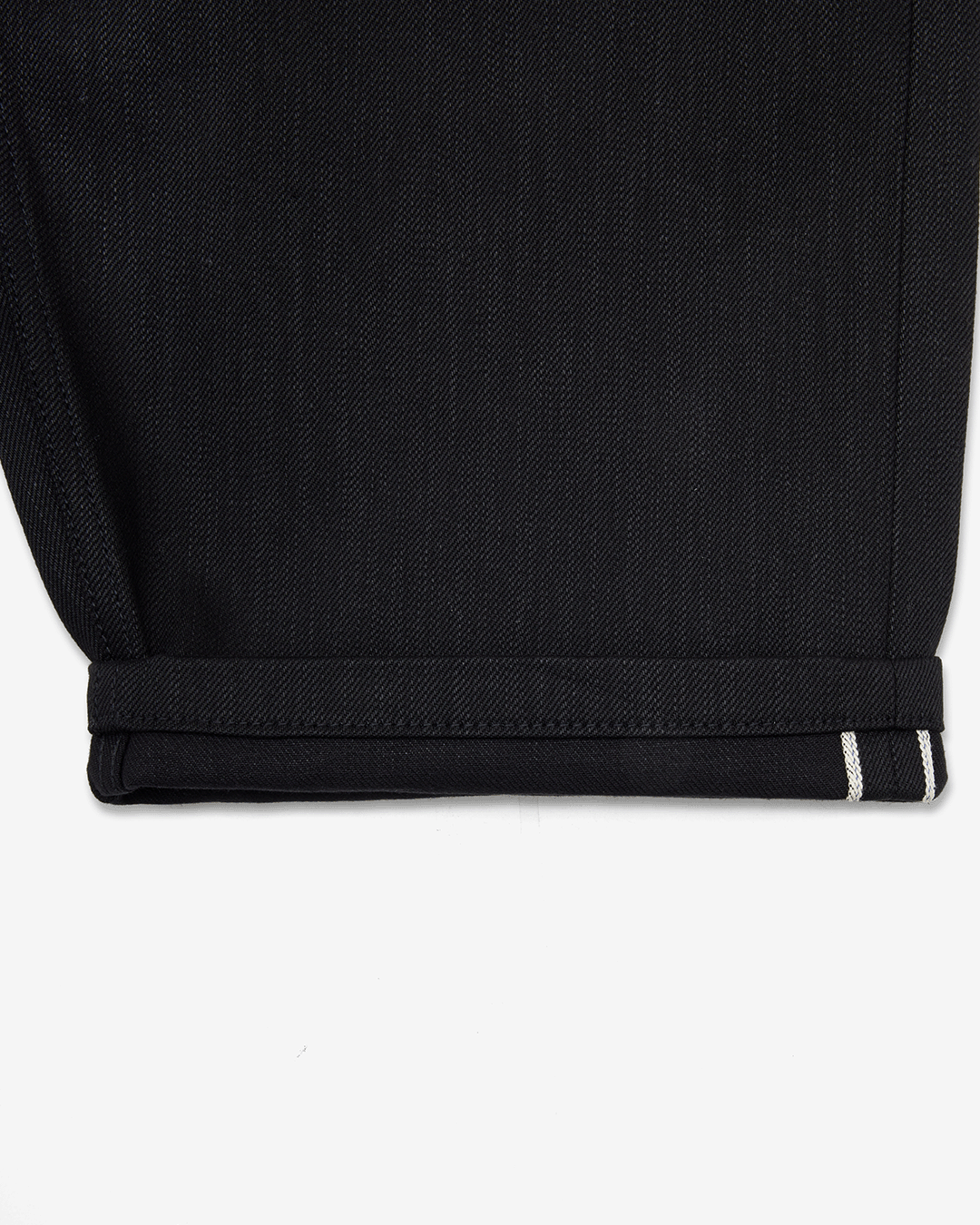
Selvedge refers to how a fabric is woven, not how it's finished. It's made on a narrow shuttle loom that produces a clean, self-finished edge on both sides of the fabric. This type of construction is slower and more meticulous which results in a higher quality denim. You can often identify selvedge denim with the red coloured yarns that show when cuffing the jeans.
The most important thing to note is that raw does not mean selvedge and they aren’t mutually exclusive: Denim can be both raw and selvedge, but selvedge denim can also be washed and sanforised.
Where raw and selvedge describe how denim is dyed and woven, sanforised and unsanforised are about what happens to it afterwards. Specifically, whether the fabric has been pre-shrunk before it's cut and sewn.
Unsanforised denim hasn't been pre-shrunk, so you can expect it to shrink after the first wash.
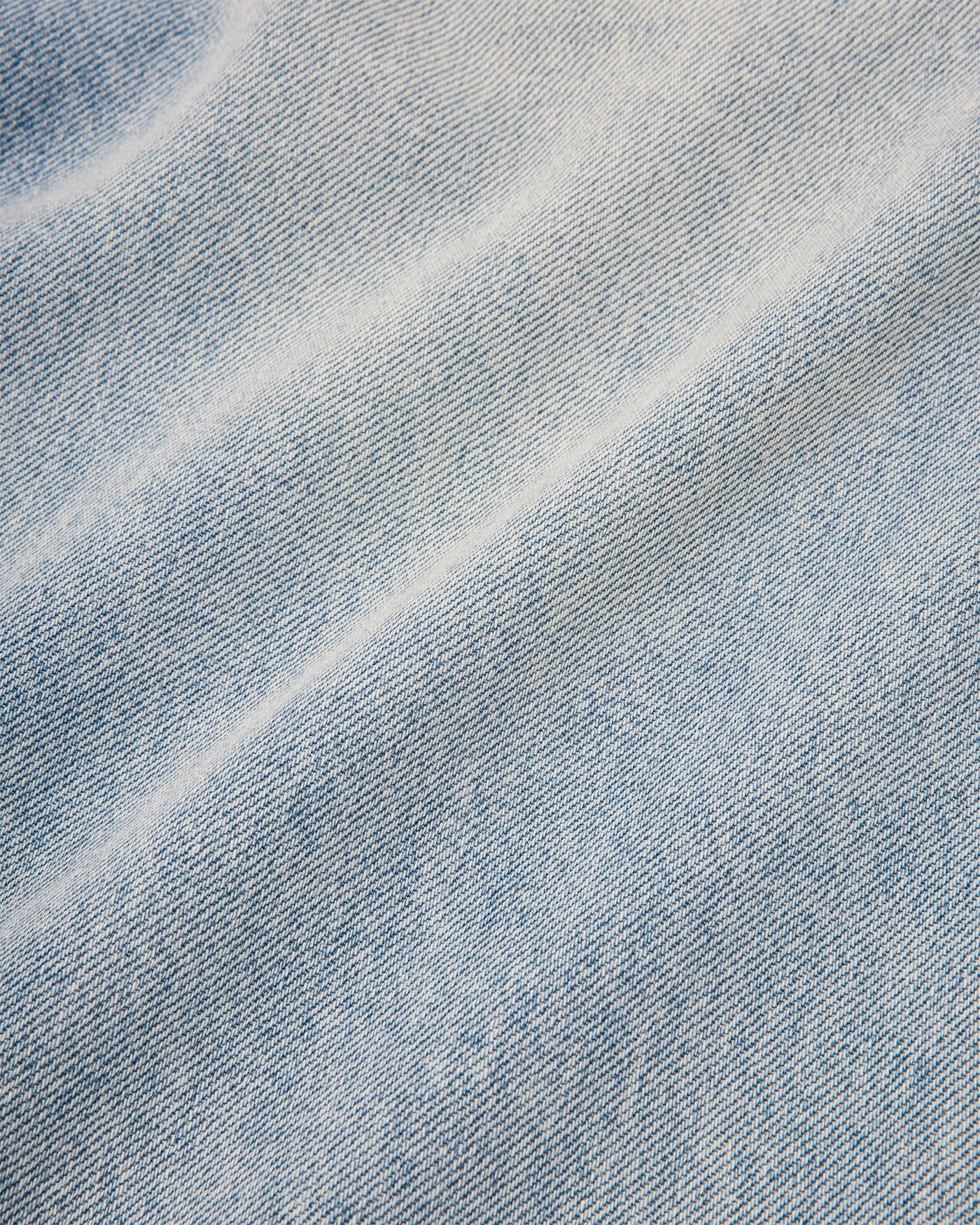
Sanforised denim has been pre-shrunk and usually pre-washed. It's the softest of the four, the most predictable to care for, and by far the most widely used.
Hand feel can tell you what's been done to the cloth. Sanforised denim feels soft immediately and more consistent because it's already been through a wash process. Some people think this means the fabric is lower quality, but in reality it’s just a simpler fabric to take care of which was the original intention behind creating sanforised denim. Selvedge and raw denim will feel more substantial, sometimes rough, but that's not a flaw. They're just built for different things.
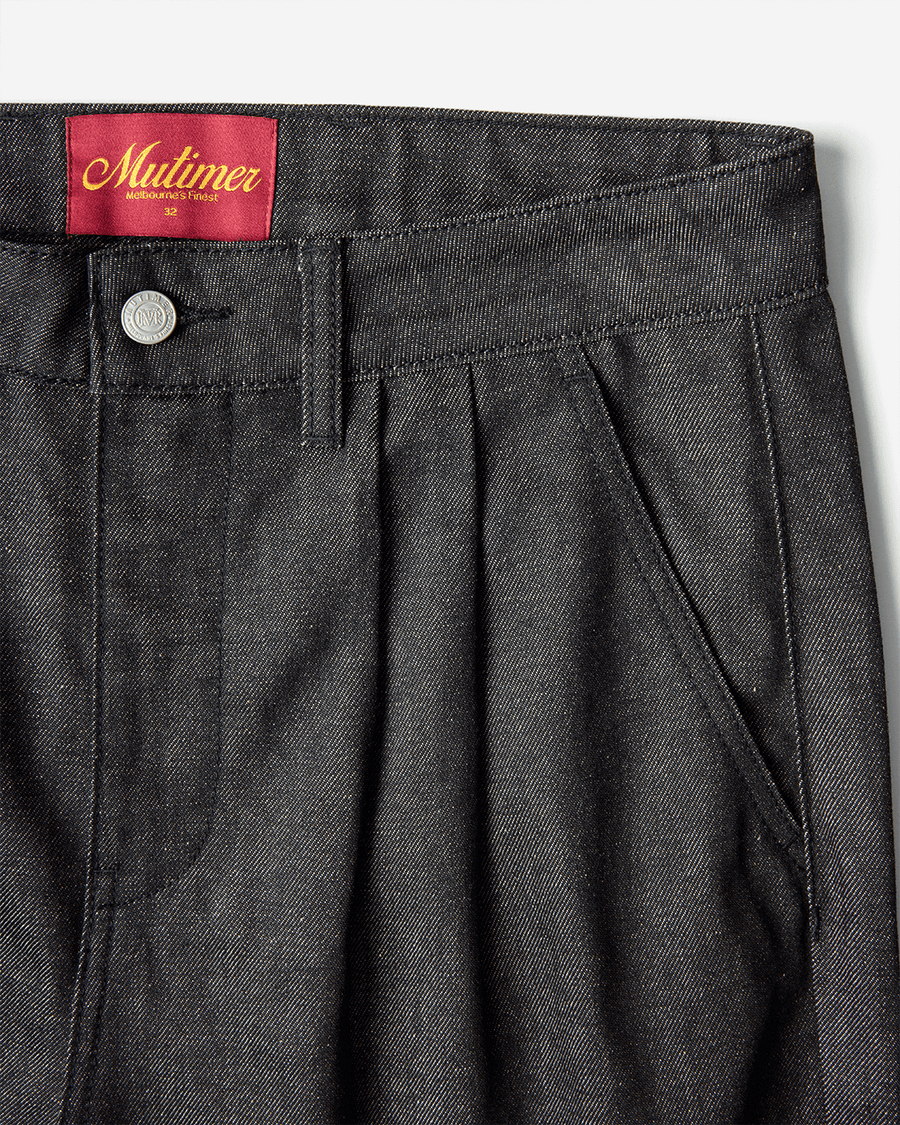
Weight is the first thing to look at, and it’s commonly measured in ounces. It's a straightforward indicator of durability where a heavier fabric has a thicker construction, and a thicker construction typically lasts longer. A lot of denim designs at Mutimer feature a midweight range of 12oz - 15oz, so they feel comfortable to wear, but not overbearing in nature.
Raw denim tells the story of how it's been lived in. The indigo fades where the fabric has creased and flexed over time, behind the knee, across the thigh, along the seat. The word for this is patina, and it's a feature that indicates wear. No two pairs age the same way because no two people move the same way or have the same body shape. This makes owning raw denim a more personal experience.
Sanforised denim stays consistent. What you buy is typically what it stays. Selvedge softens gradually but will hold its colour unless it's also raw.
The one care note that applies across all of them: wash less than you think you need to. Frequent washing shortens the life of any denim regardless of type, and in most cases isn't necessary unless there's a mark that needs treating.
Mutimer has always embodied the design philosophy of ‘Future Nostalgia. The one thing we like to avoid is denim made around a trend. Overly fabricating distressing, cuts that work for one season and look dated by the next. When we use raw or selvedge fabrics, we cut them straighter for that reason. We believe in quality construction and enduring silhouettes that can be worn regardless of time.
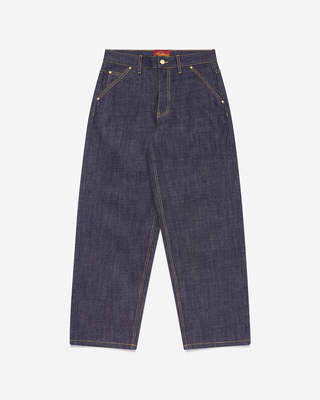
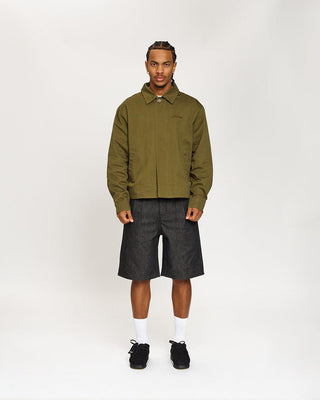
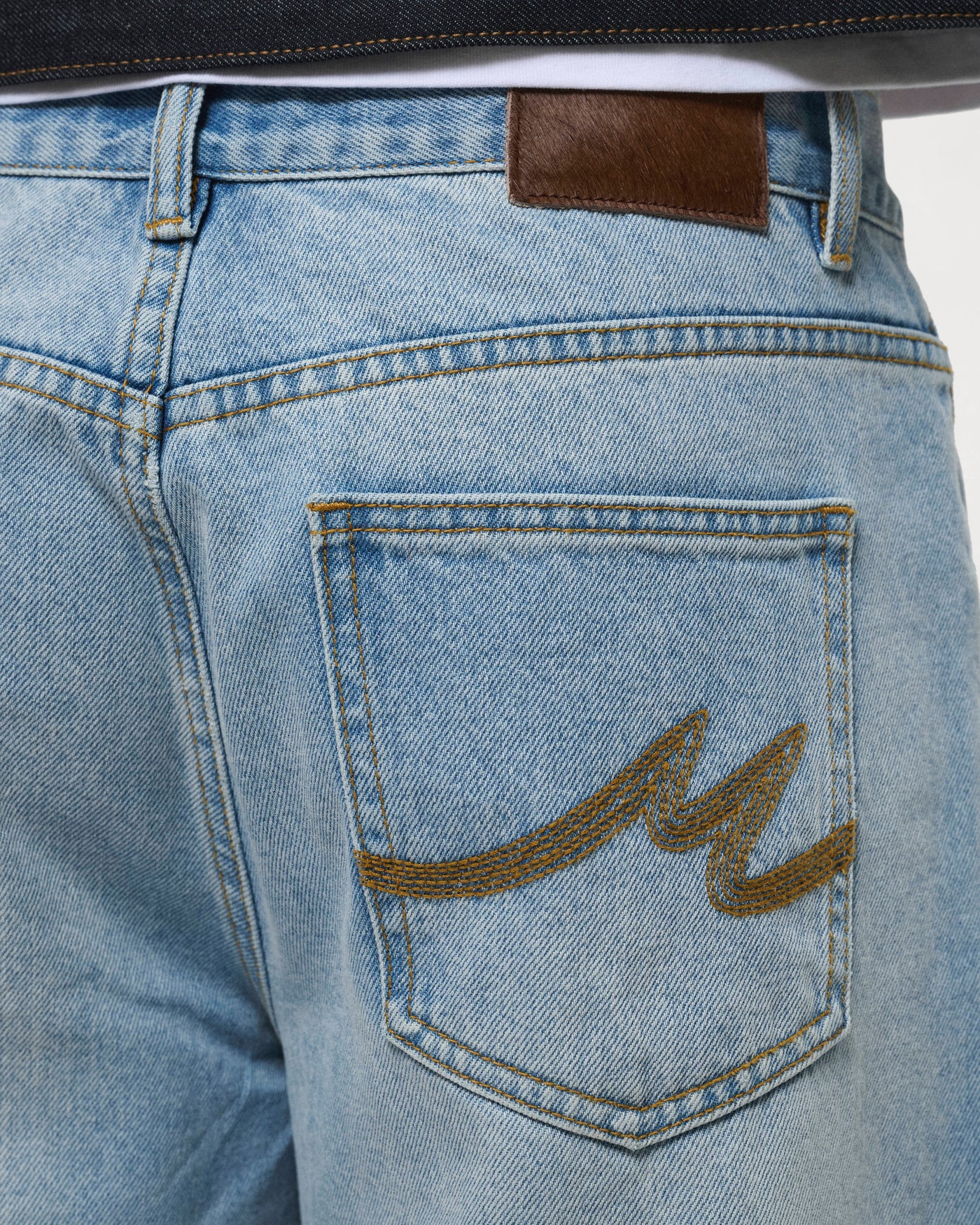
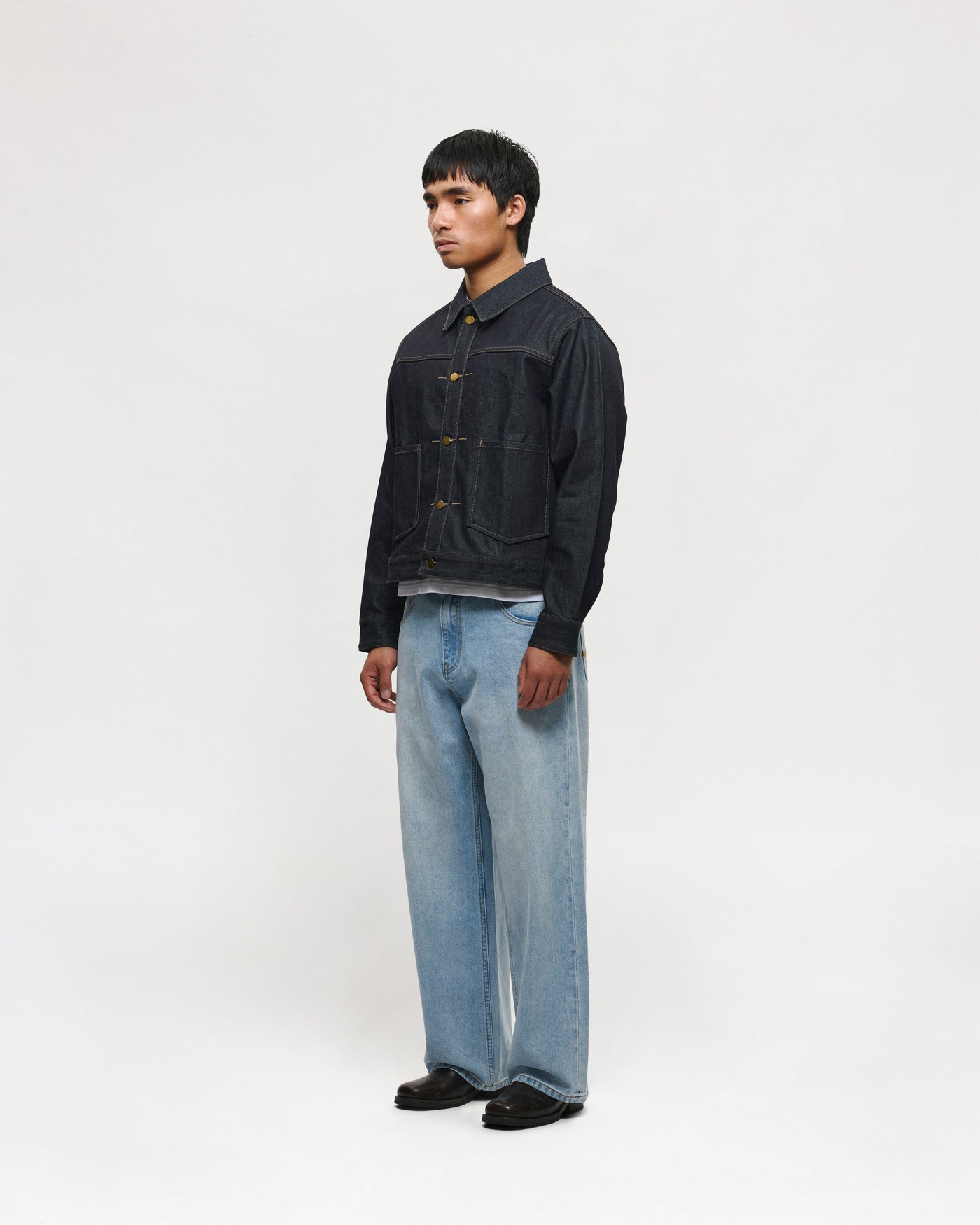
The Straight Cut Denim is the clearest example of how we work with sanforised fabric. Soft from the first wear, pre-washed for a consistent colour over time, built for everyday use. A straight fit that can be worn for all occasions.
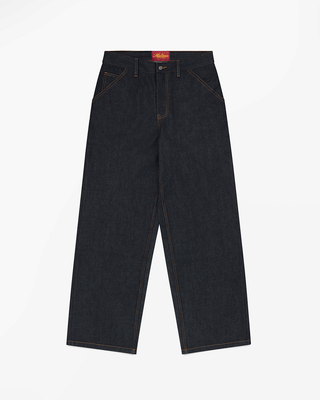
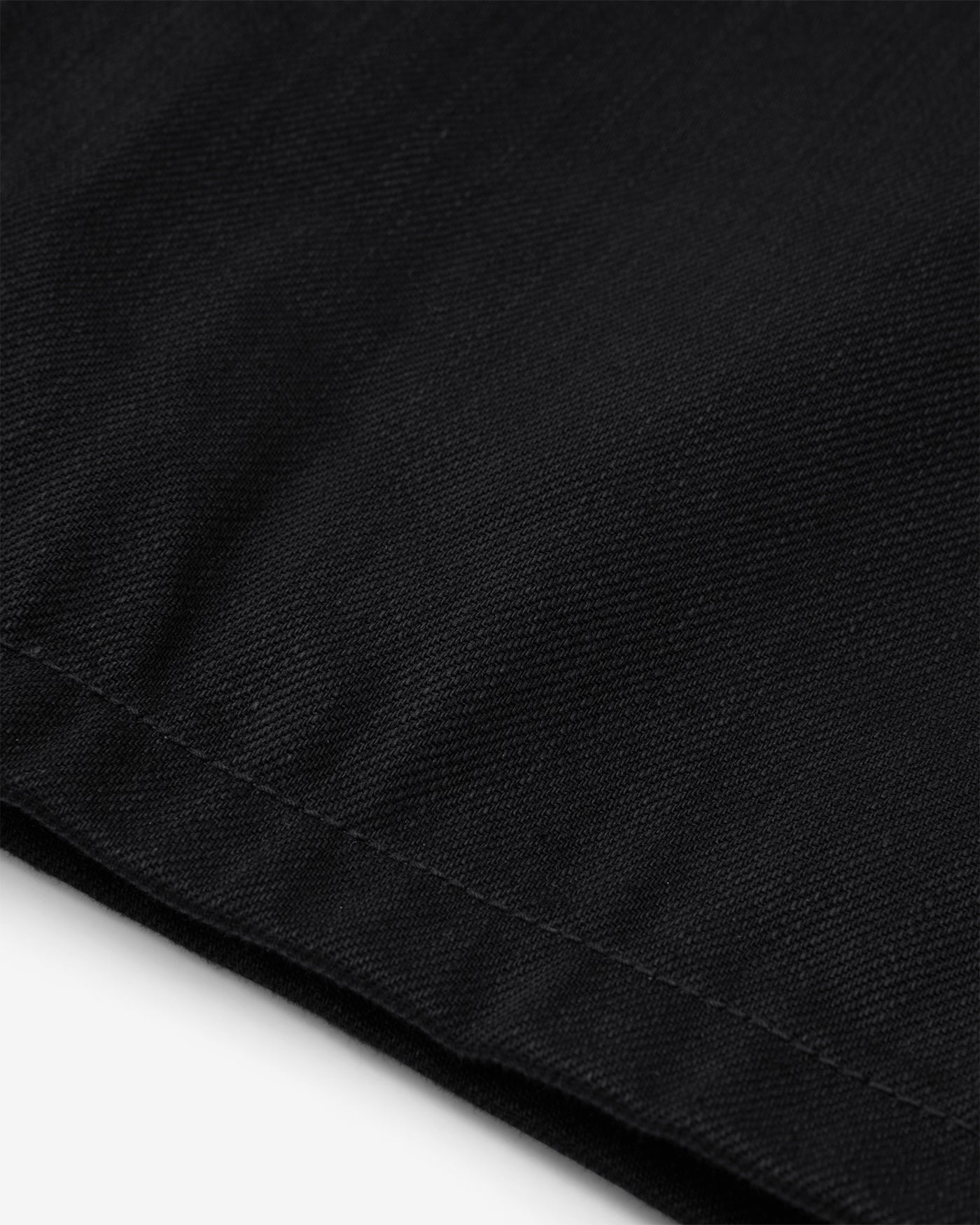
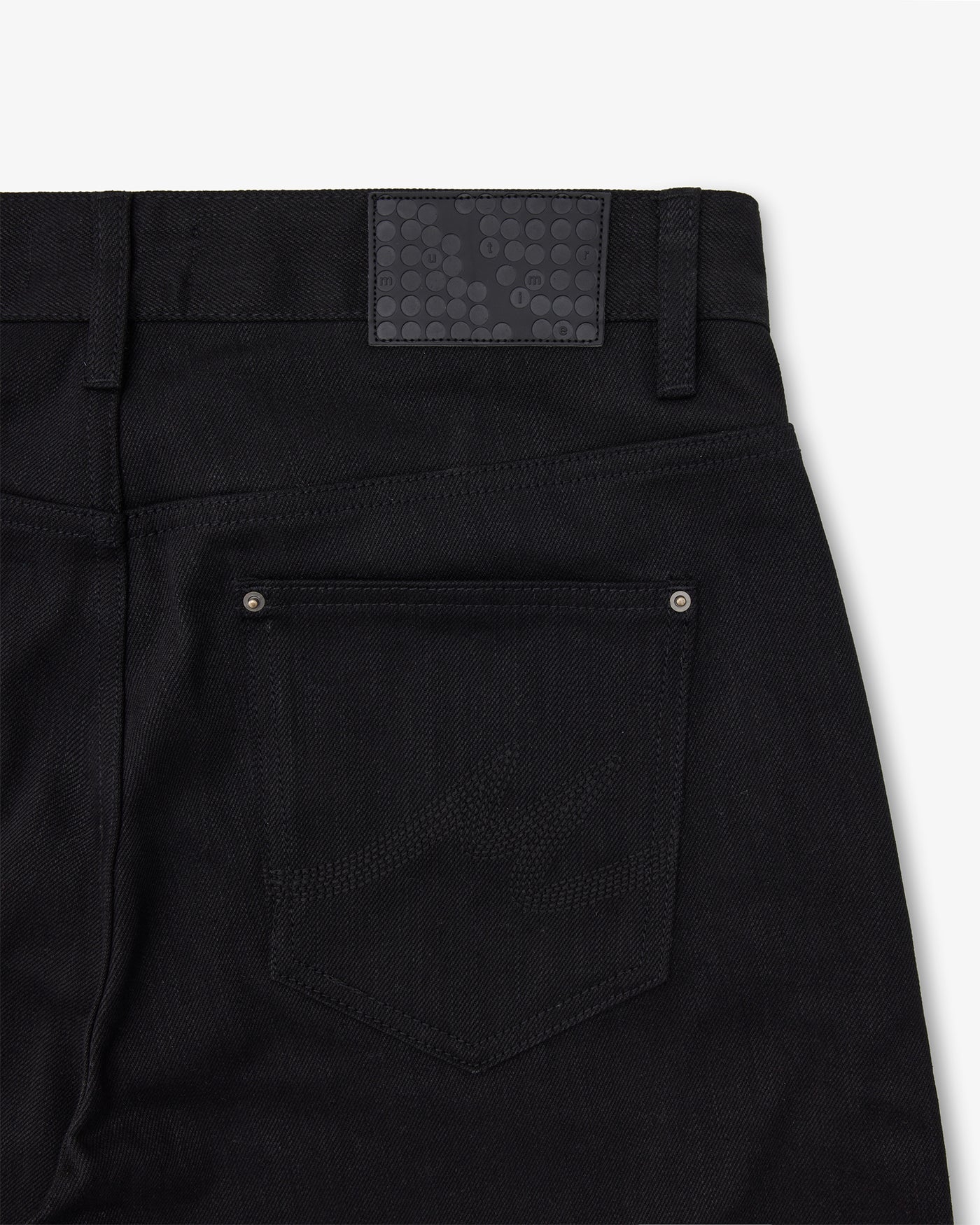
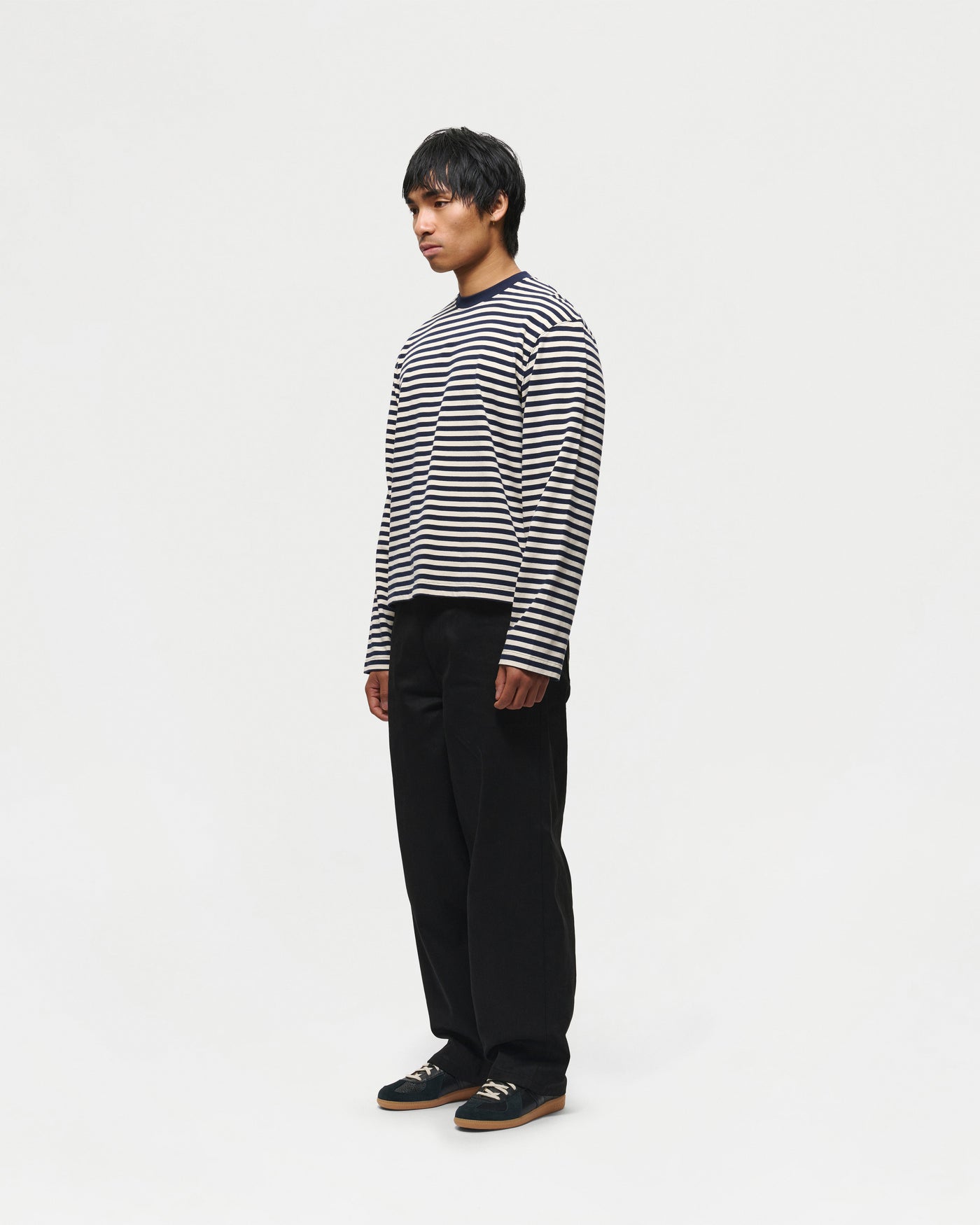
The Double Black Selvedge Denim is a contrasting piece, it starts stiffer, asks more of the person wearing it, and rewards that care over time with a character that a pre-washed jean can't replicate.
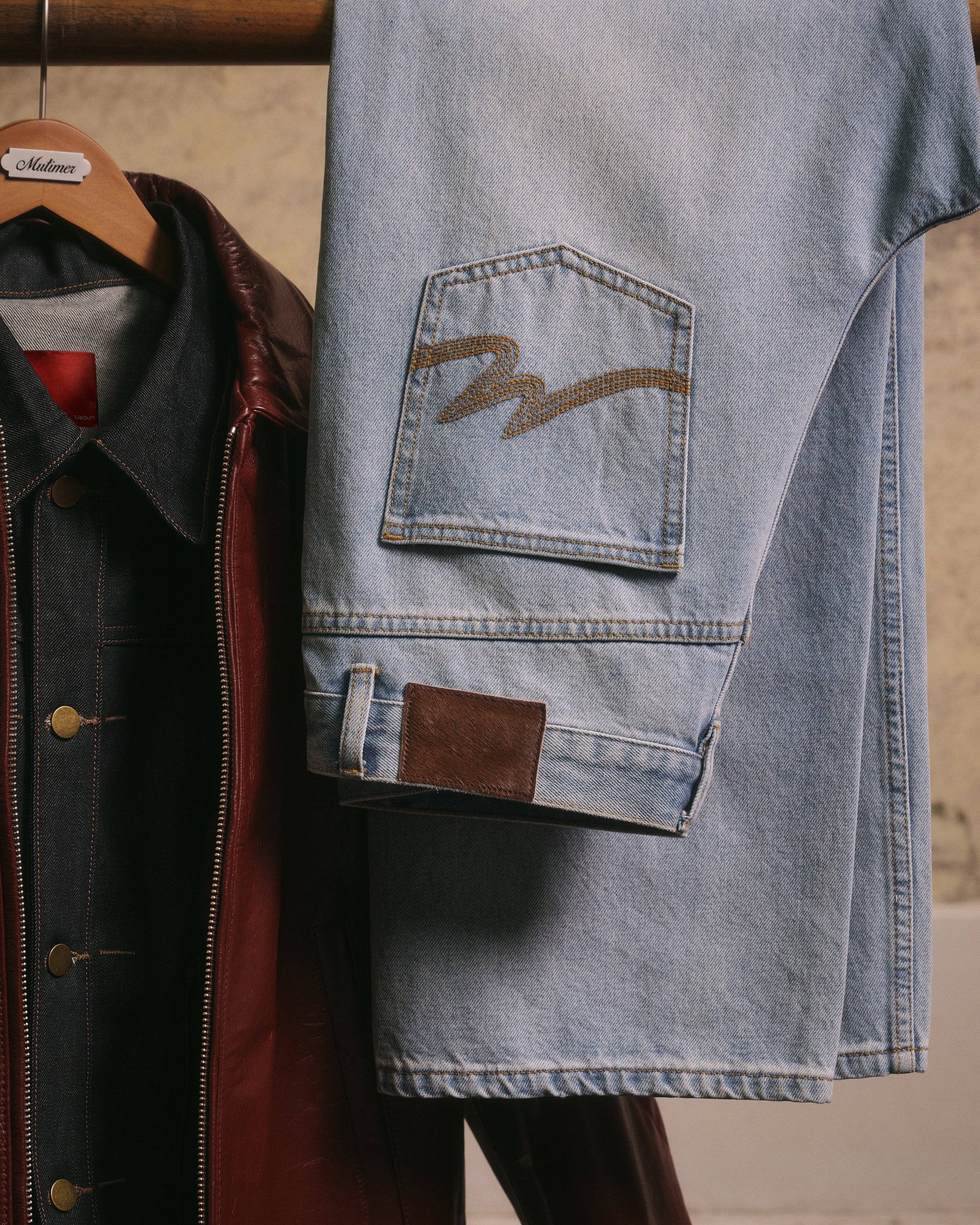
Both are finished with our custom back pocket stitching and hardware throughout which gives a subtle but unmistakable Mutimer hint.
What is selvedge denim?
Selvedge denim is denim woven on a shuttle loom, which binds each edge of the fabric with a tight self finished edge instead of leaving it open. The slower weave produces a denser, more even fabric, and the sealed edge is the 'sevledge ID' you see on the outseam when the cuff is rolled.
Is raw denim the same as selvedge denim?
No. Raw denim is denim that hasn't been washed or treated after weaving, so it starts stiff and fades to the pattern of your wear. Selvedge refers to the weave, whereas raw refers to the finish. Denim can be both raw and selvedge.
Is selvedge denim worth it?
If you care about how a garment ages, yes. Selvedge construction is slower and more precise, which shows in the quality over time. It's not a premium you need to pay for everyday denim, but for a pair you intend to wear for years it's a considered choice.
Does raw denim shrink?
Unsanforised raw denim will shrink after the first wash depending on the fabric weight. Sanforised raw denim has already been pre-shrunk so it stays true to size. Always check which one you're buying.
How often should you wash raw denim?
As infrequently as possible. Most people wash far more than they need to. Spot treat marks when they happen and wash the full pair using the care instructions, only when necessary.
What does denim weight mean?
It refers to how heavy the fabric is, measured in ounces. Heavier denim (14oz+) is more durable and structured. Lighter denim (under 12oz) is softer and more comfortable from the start.