


CRAFT · June 2026
What Full Grain Leather Means, And Why Genuine Leather Doesn't Last
Understand leather from hide to finish: the grades from genuine to full grain, chrome versus vegetable tanning, and the care that makes a jacket last a lifetime.
25 June 2026 · 10 min read
A quality leather jacket can last you a lifetime but it often comes with a heavy price tag. Before you invest in one, it’s important to understand the overwhelming amount of options and different terms used to describe the final product.
Like denim, not all leather is created equal and there are a plethora of decisions that go into making a leather jacket. From sourcing, to dyeing, and how the leather is tanned and finished, all contribute to how good your leather jacket will look and feel over time.
Leather grade is the most common way leather is described and refers to the type of leather and which part of the animal it’s come from. The grade of leather is not the end all or be all of leather, but it typically is a good starting point on whether or not the garment is worth looking at.
First is ‘Genuine Leather’, which is probably the most common grade of leather, and often used to describe products at lower price points. Have you ever bought a genuine leather jacket and found that it started to tear or fade after a couple months of wear?
Genuine leather simply means that it is real leather. It can be applied to any level of quality, so many brands will use this term to hide the lower quality of leather being used in the make. In most cases, genuine leather will be a ‘finished split’ leather, which is when different parts of the animal hide are coated with a polymer to mimic the look of a natural grain leather. It results in a product that is considerably less durable and more prone to peeling or cracking over time. It also cannot develop the natural patina that high-quality leathers do. That said, genuine leather is not automatically poor quality. Because the term covers such a wide range, you can still find well made genuine leather jackets, it just means the label alone won't tell you, so it pays to look closer before you buy.
Then there is Top Grain Leather. This refers to the top layer of the animal hide and has been sanded/corrected or embossed for a particular purpose. It’s typically altered to achieve a distinct look or pattern, and can be used to hide some of the original marks or faults present in the material. You might commonly see top grain leather used in things like bags, or accessories to achieve a uniform pattern.
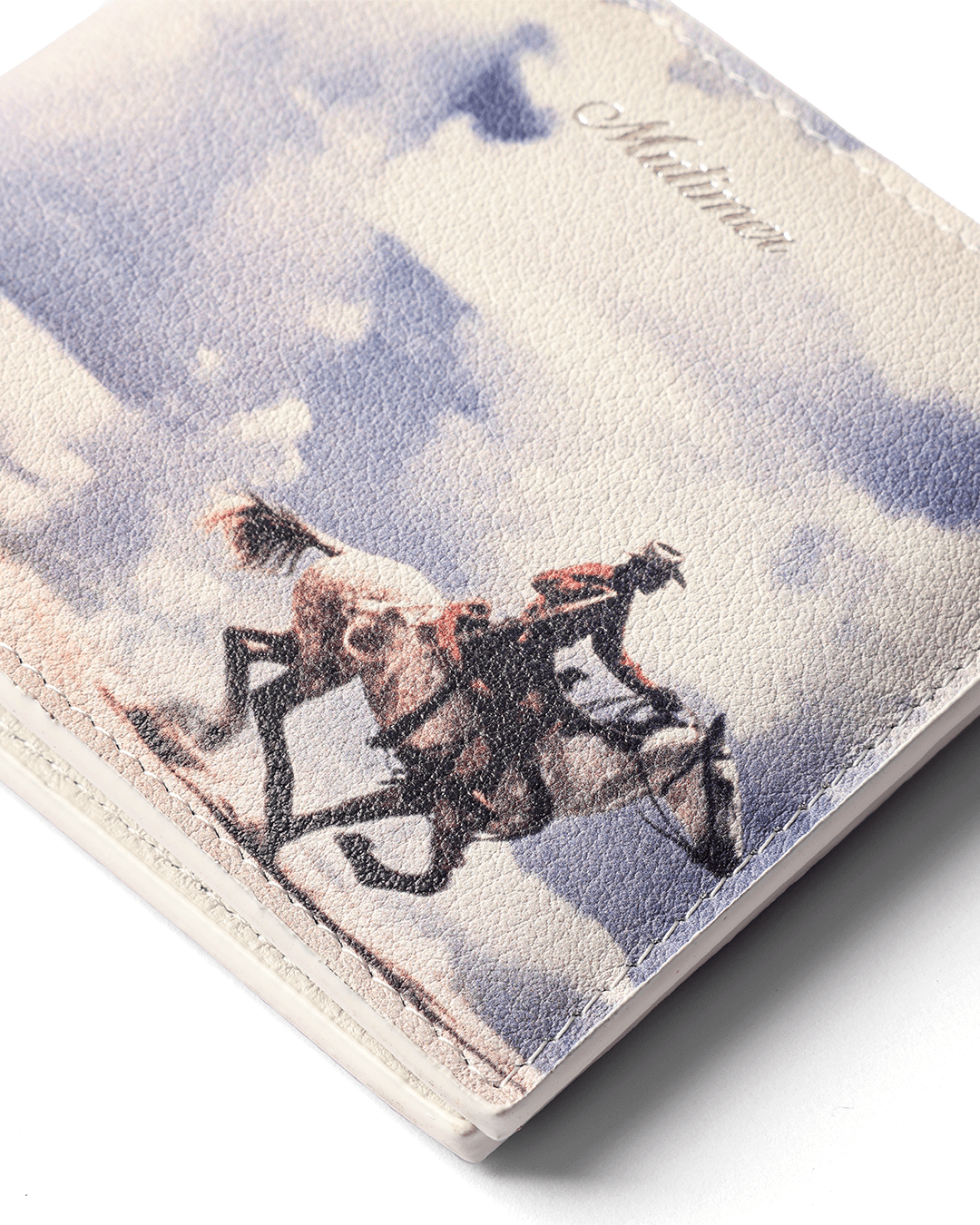
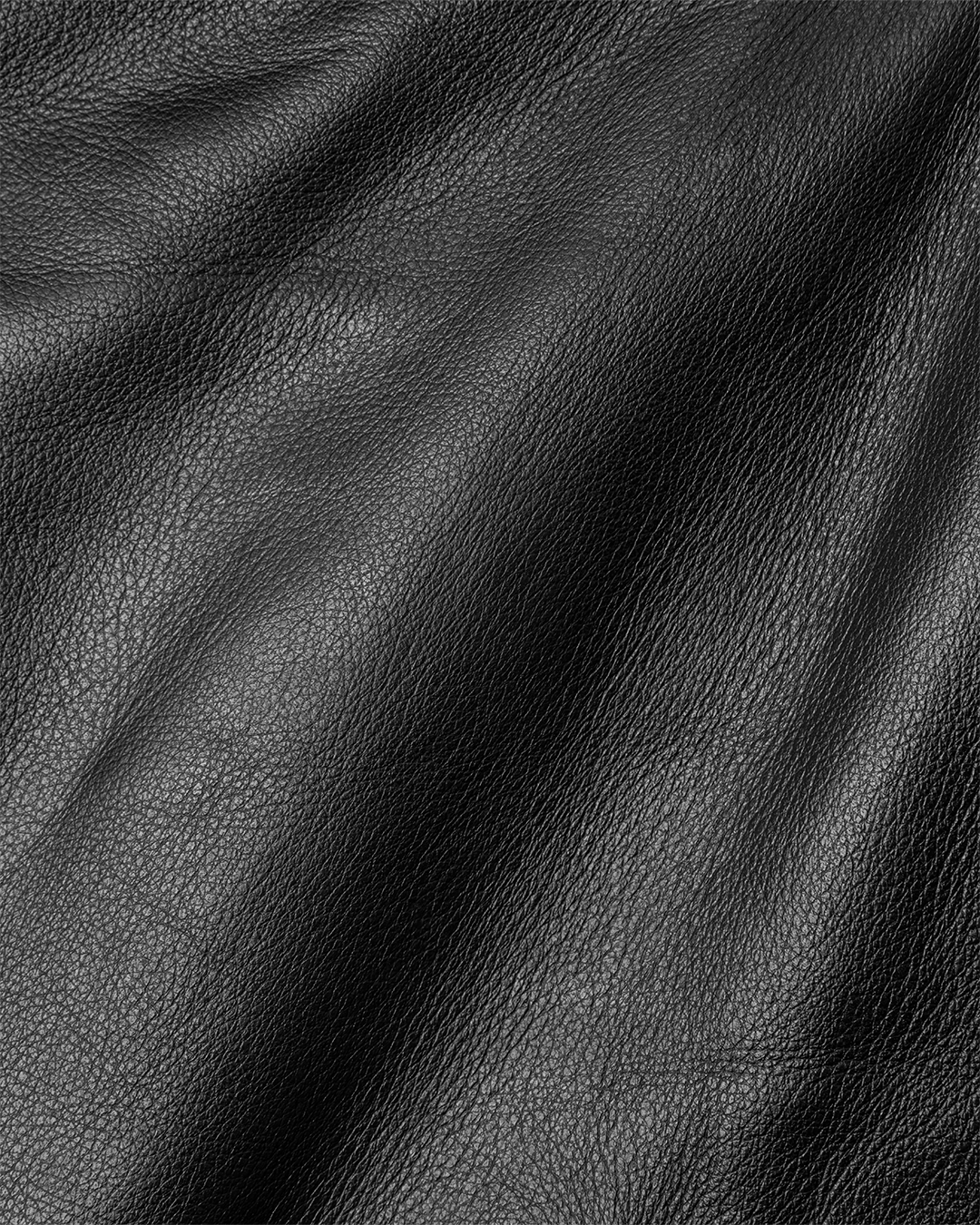
Full Grain Leather is similar to top-grain leather, however, nothing has happened to alter the outermost layer of the leather. This results in a leather that retains much of its original character. It’s worth noting that even for full-grain leather, the quality can range vastly.
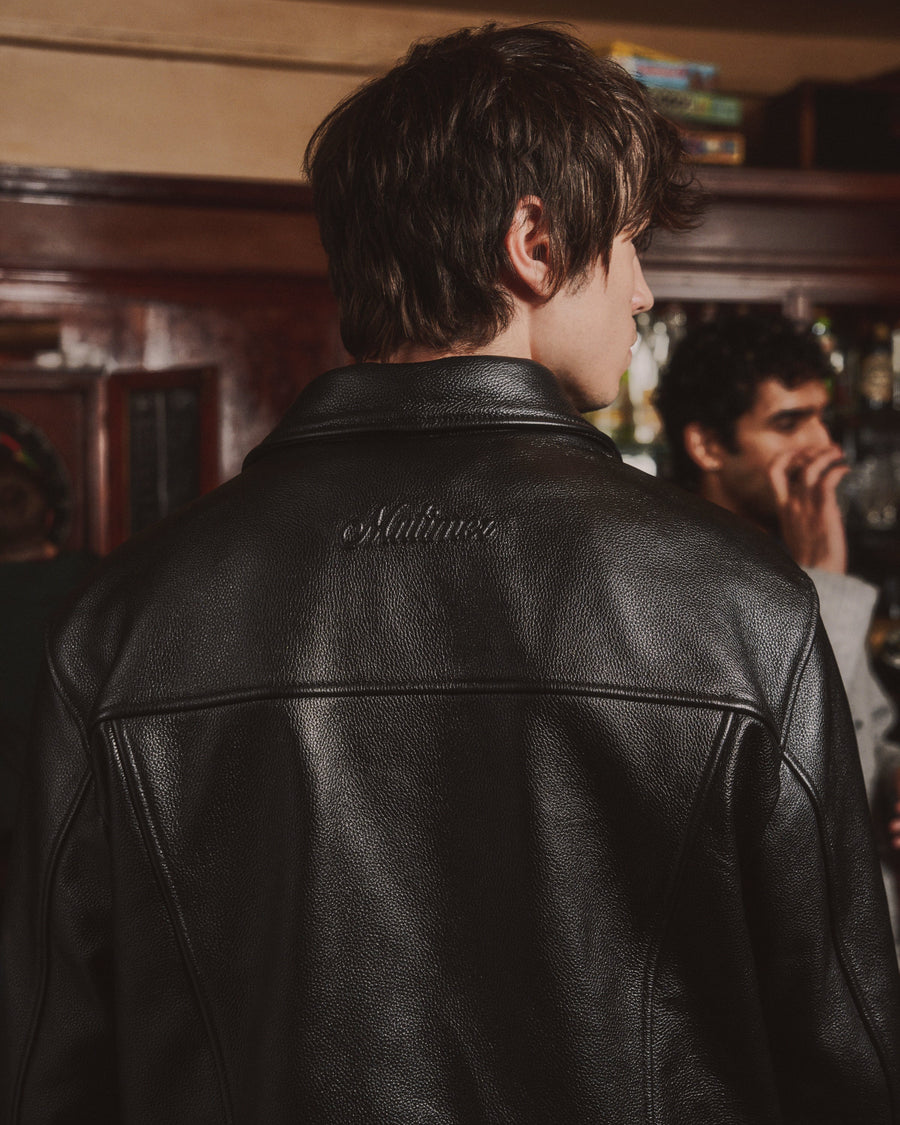
At Mutimer, we use Full Grain Leather for the majority of our leather jackets to ensure that they retain a lot of the original qualities, and develop a unique character that makes owning something one-of-a-kind. All the grains on our leather are natural, and we pick them accordingly. This is why the surface character slightly differs from some of our leather jackets.
Not all leather comes from the same animal, and the choice of a hide is a deliberate one.
Cowhide is the usual default for leather jackets. We use full grain cowhide leather for its thickness, durability, and overall quality, the qualities you want in a piece meant to be worn and kept for years.
Full grain Lambskin leather is lighter, drapes beautifully, and feels supple in a way cowhide doesn't. It is often used for softer and smaller items like gloves or bags, but it can also be used for larger garments like jackets, and sits at a far higher cost due to the lower yield from the animal.
Pigskin is the other common option, and it's a lower grade: rougher, with a different texture. There's a time and place for everything, but it isn't something we've chosen to use in any of our collections yet.
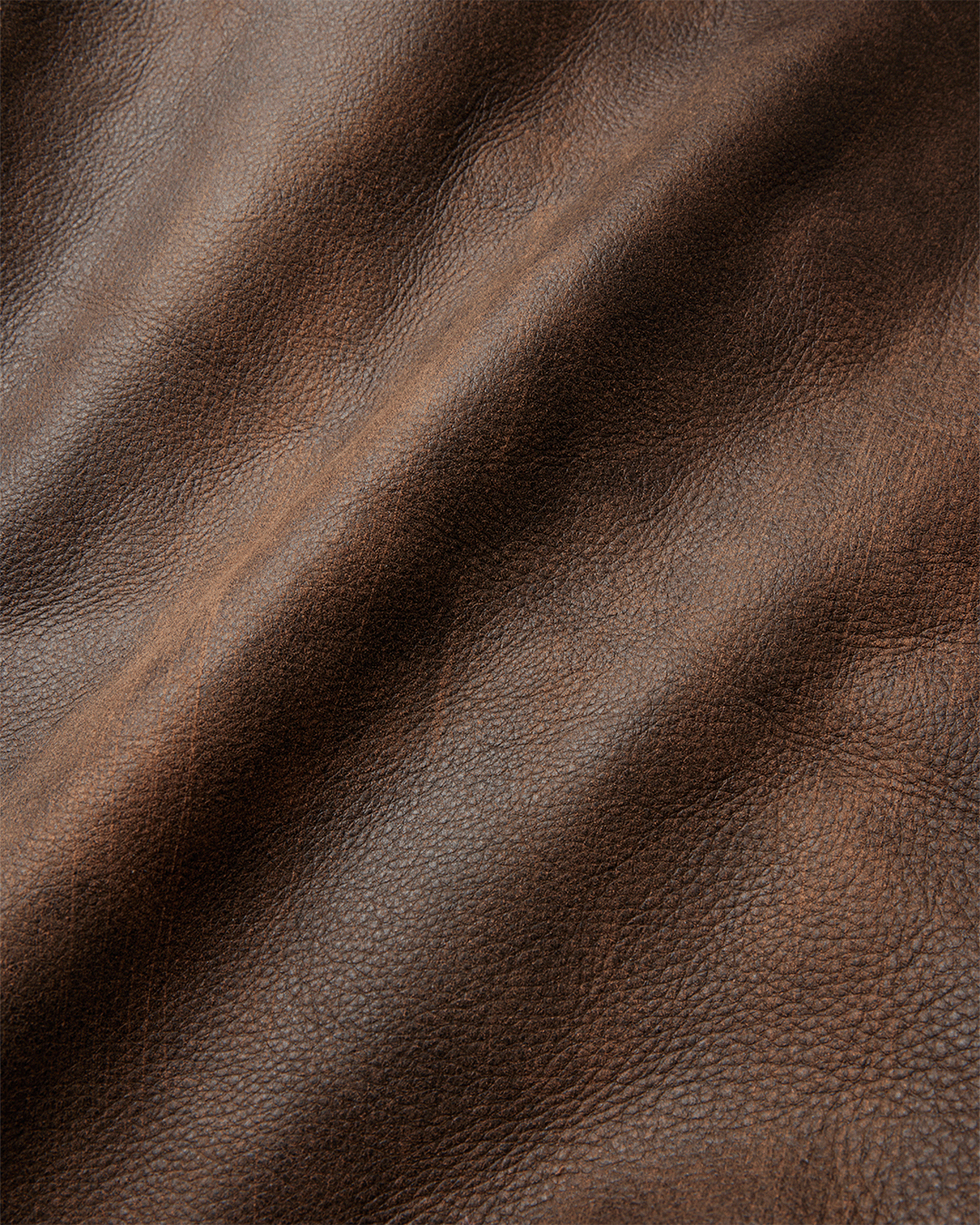
Where grade and hide describe what the leather is, tanning describes what's done to it, and it shapes the colour, the feel, and how the piece ages.
Chrome tanning is the more popular tanning method due to its more efficient process. It involves tanning the hides with a chromium solution which prevents the natural decay of the animal hide. This results in a lighter and more supple leather, with higher heat and water resistance, and is easier to dye.
Vegetable tanning on the other hand, is when natural tannins found in things like tree bark, leaves, and branches are used to tan the hide over a longer period of time. The process involves multiple tannin solutions being applied over the course of several weeks to ensure they fully penetrate the inner fibres of the animal hide. Contrasting to chrome tanning, this process takes much longer, the leather is usually stiffer and doesn’t react to water well. However, this allows the natural patina to be more exaggerated as you wear it.
Most of our leather is chrome tanned. It's the more efficient way to tan a hide and much easier to achieve specific, consistent colours than vegetable tanning. There's nothing lesser about it, despite what some purists will tell you. Chrome tanning trades a little of that drama for durability and consistency, which suits the way our pieces are meant to be worn.
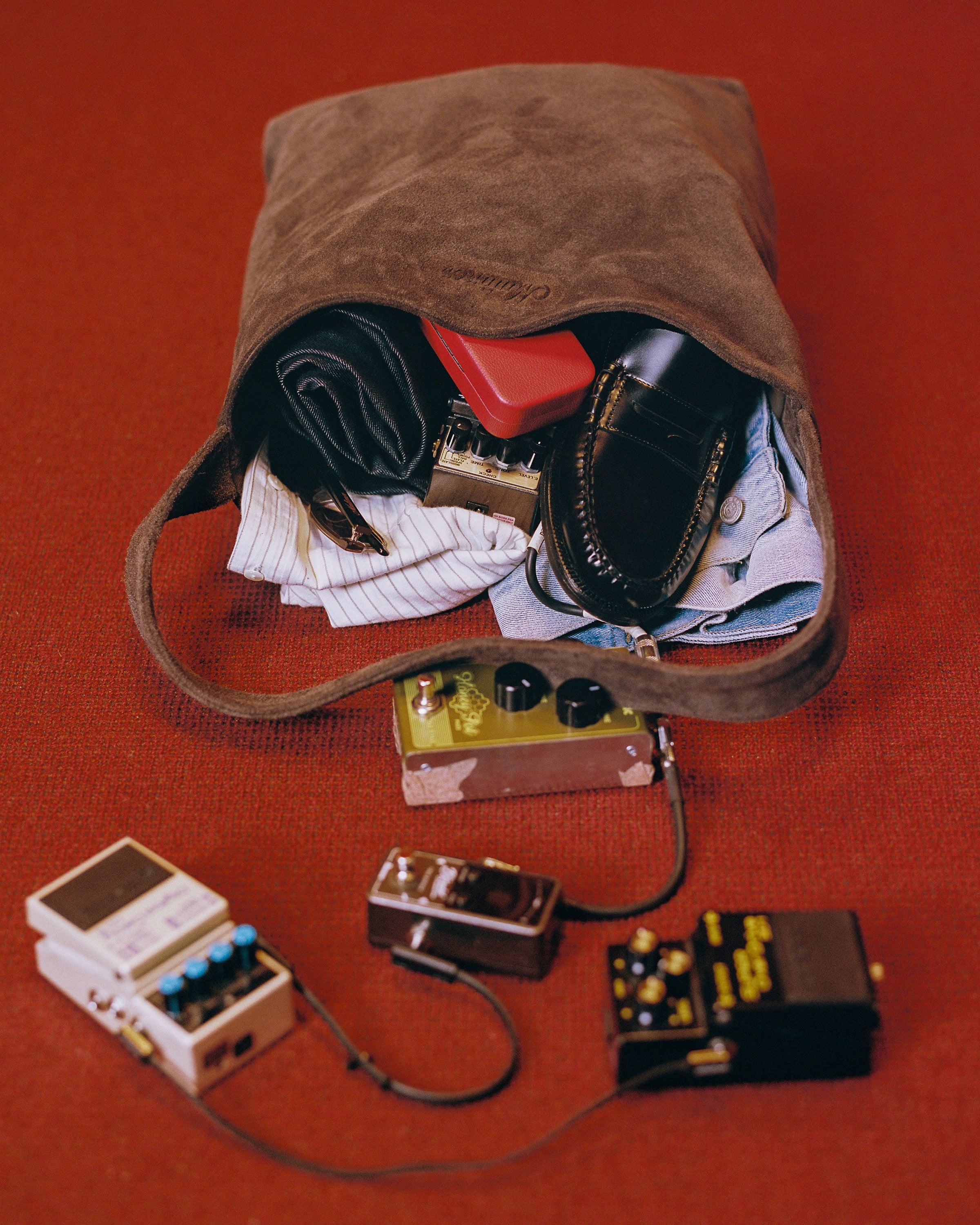
Tanning sets the foundation of the leather, but the surface gets its own treatment, and that is where finishing comes in. Suede is a unique finish which involves using the softer inner layer of the hide. It’s then sanded down to create the brushed suede texture we’re all familiar with. Suede is much more delicate than its outer-layer counterpart, so it requires much more deliberate care when owning a suede item.
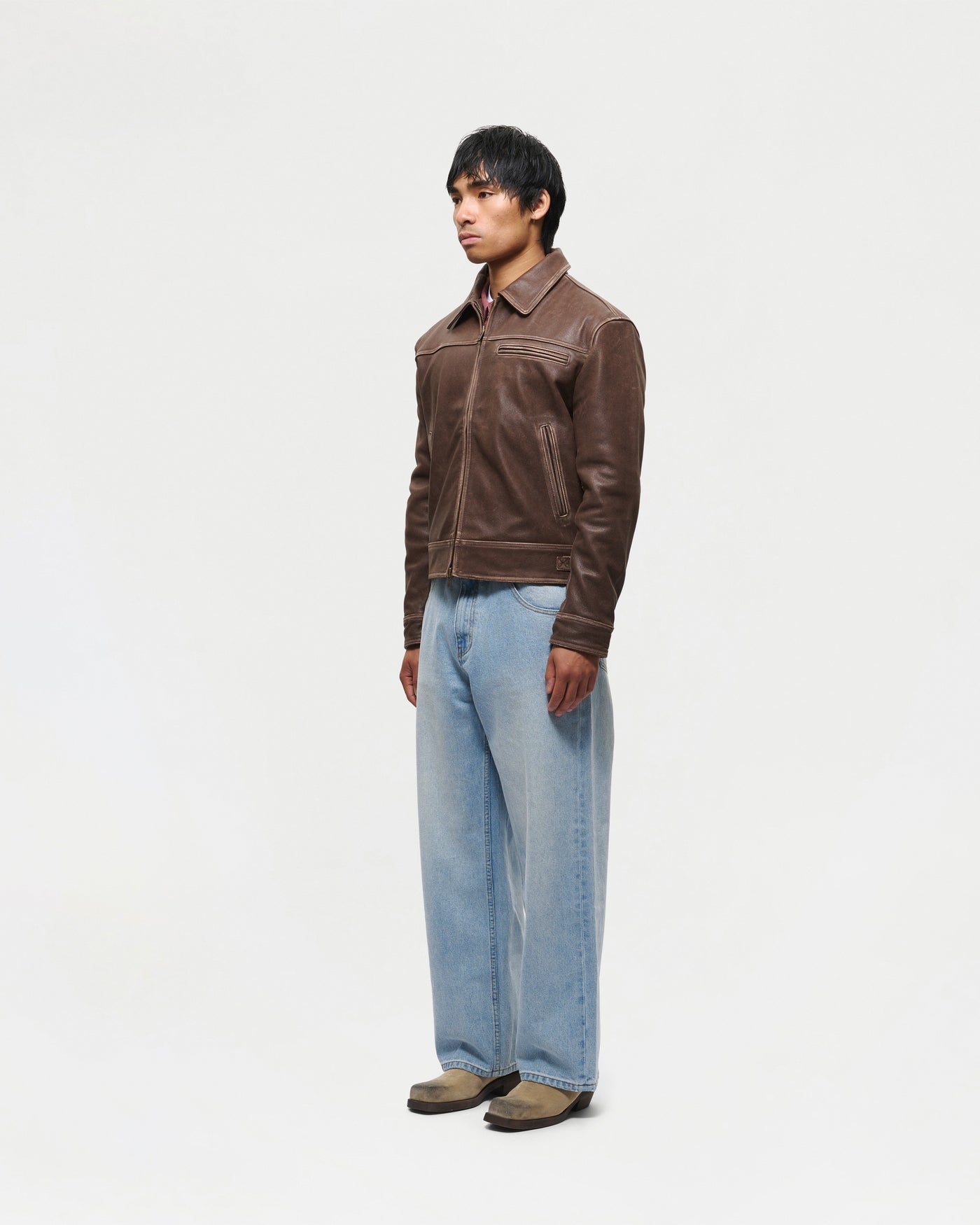
A high quality leather is one of the few materials that improves with use rather than degrading. Most of our jackets don't develop a drastic colour patina in the way raw denim does. What they develop instead is character through creasing, the fold lines across the elbows, the break at the waist, the marks that come from being worn rather than stored. The Linea is the exception in our range. Its finish shifts slightly over time, which is part of what makes it distinctive.
Leather asks for less maintenance than people expect, and over-treating it does more harm than good. For regular full grain like ours, spot cleaning using a wet cloth works for most light marks. If the spot calls for a more drastic solution, move to a dedicated leather cleaner. Dry cleaning can work for some leathers, but only with a specialist who handles leather specifically.
It’s important to store your jacket well, hung so it holds its shape, in a well aired space away from direct sunlight, which can fade the colour over time. Avoid damp, closed-off storage options. Treated this way, a full grain jacket will outlast almost everything else you own.
Mutimer has always worked to a design philosophy of Future Nostalgia, and leather is where that idea rings most true. Leather goods done properly are already an investment in longevity, and we cut and construct the silhouettes to be worn regardless of the year.
The Linea Jacket is the most interesting black leather jacket we make. It's twice dyed, finished first in orange and then in black over the top, which is why you'll see an orange edge at the hanger loop and orange tones lifting through wherever it scuffs, the black dye giving way to the colour beneath. After dyeing, it's waxed, which gives the surface its reflective texture. That process makes the Linea more delicate and quicker to mark, but it's a jacket that will tell how it’s been lived in.
We also released the same jacket in our Bordeaux colourway, which skips the double dye for a deep red colour, but keeps the waxing, slightly lighter, for a cleaner finish that still carries the same texture.
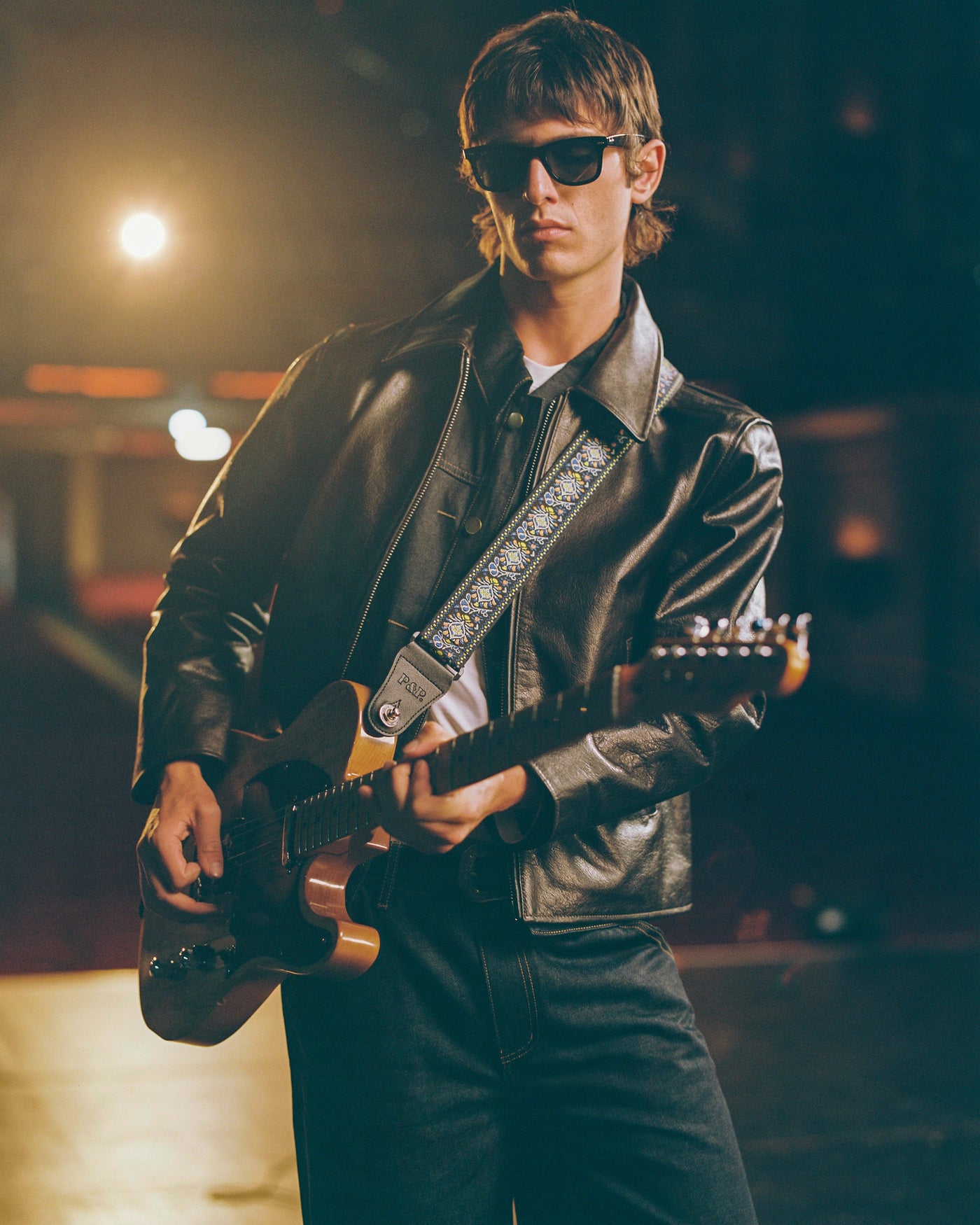
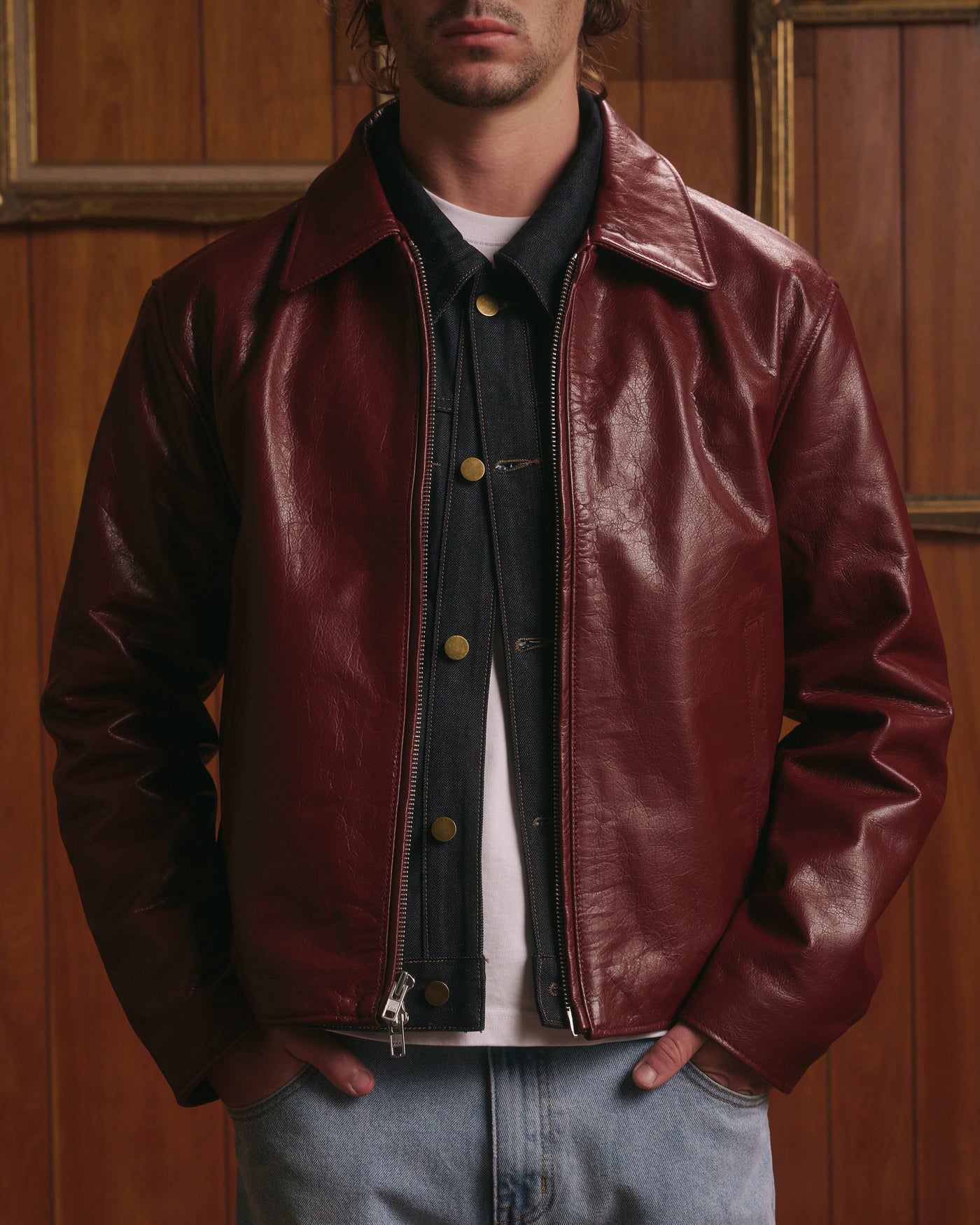
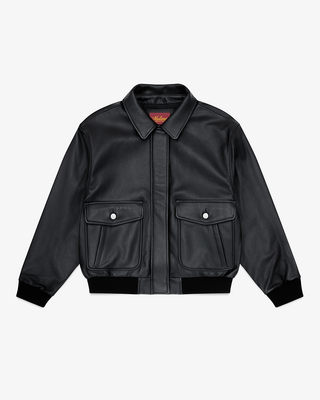
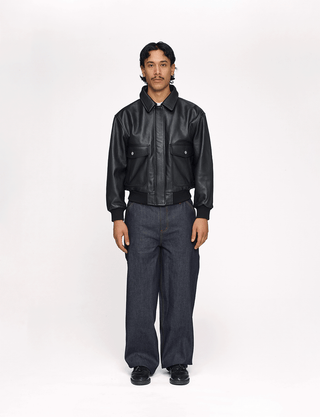
Beyond the Linea, our jackets span several classic silhouettes, from our Leather Bomber Jacket to our classic straight cut Leather Jacket, each built on the same full grain foundation.
All our cowhide leather jackets are equipped with YKK zips, sourced from Japan. They’re among the most durable and high-quality hardware made, and much like quality leather, they get better with use: stiff at first, then smoother and easier the more the jacket is worn.
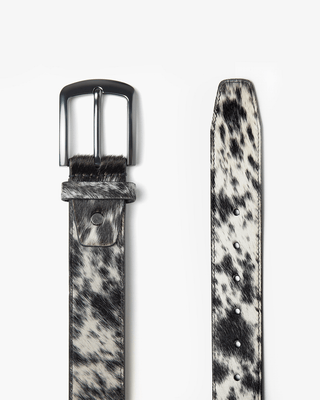
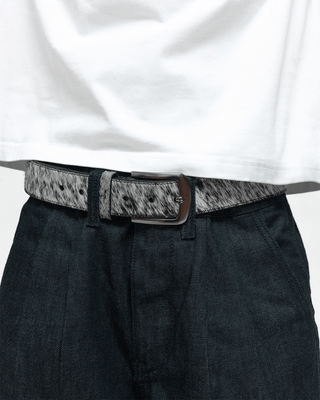
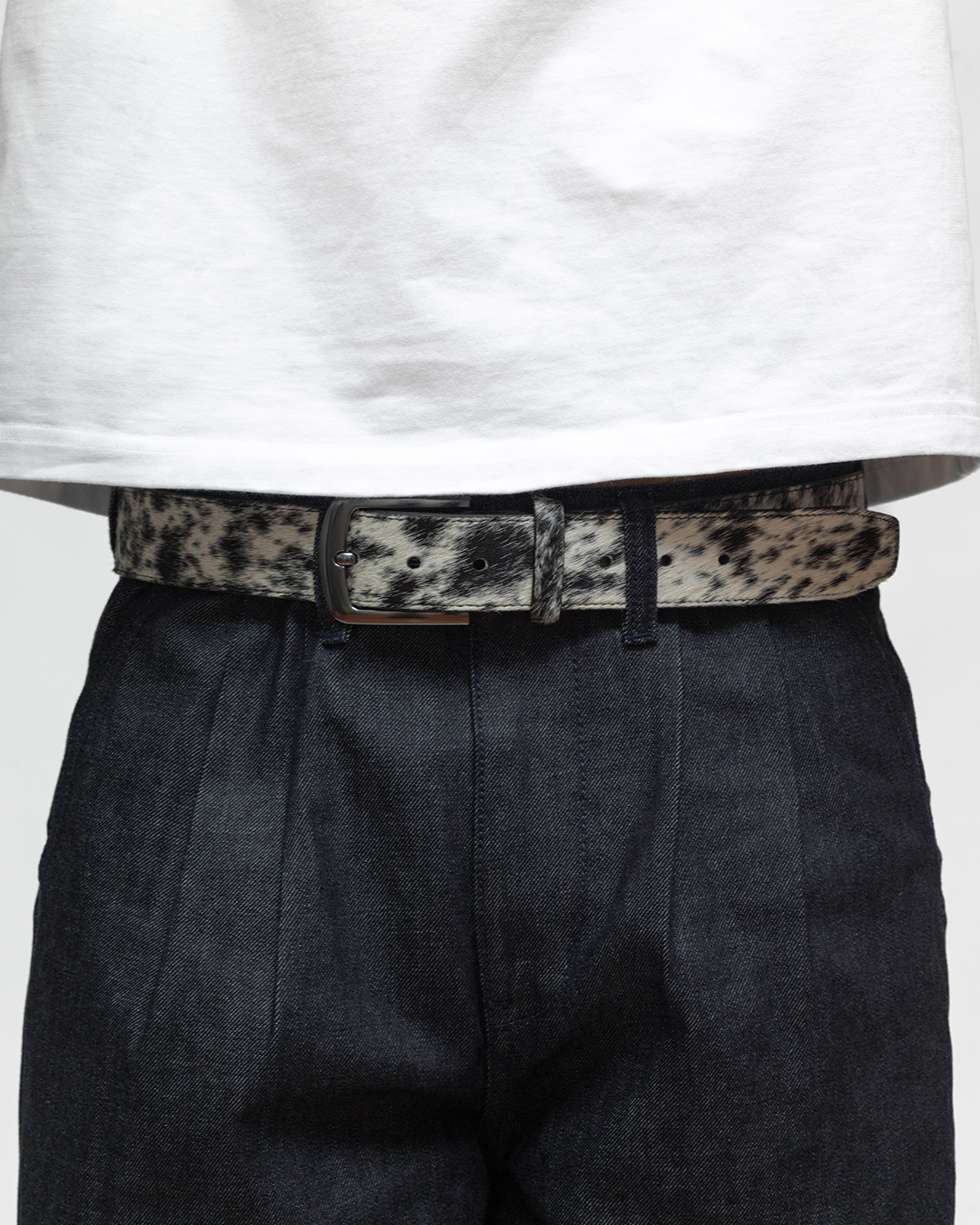
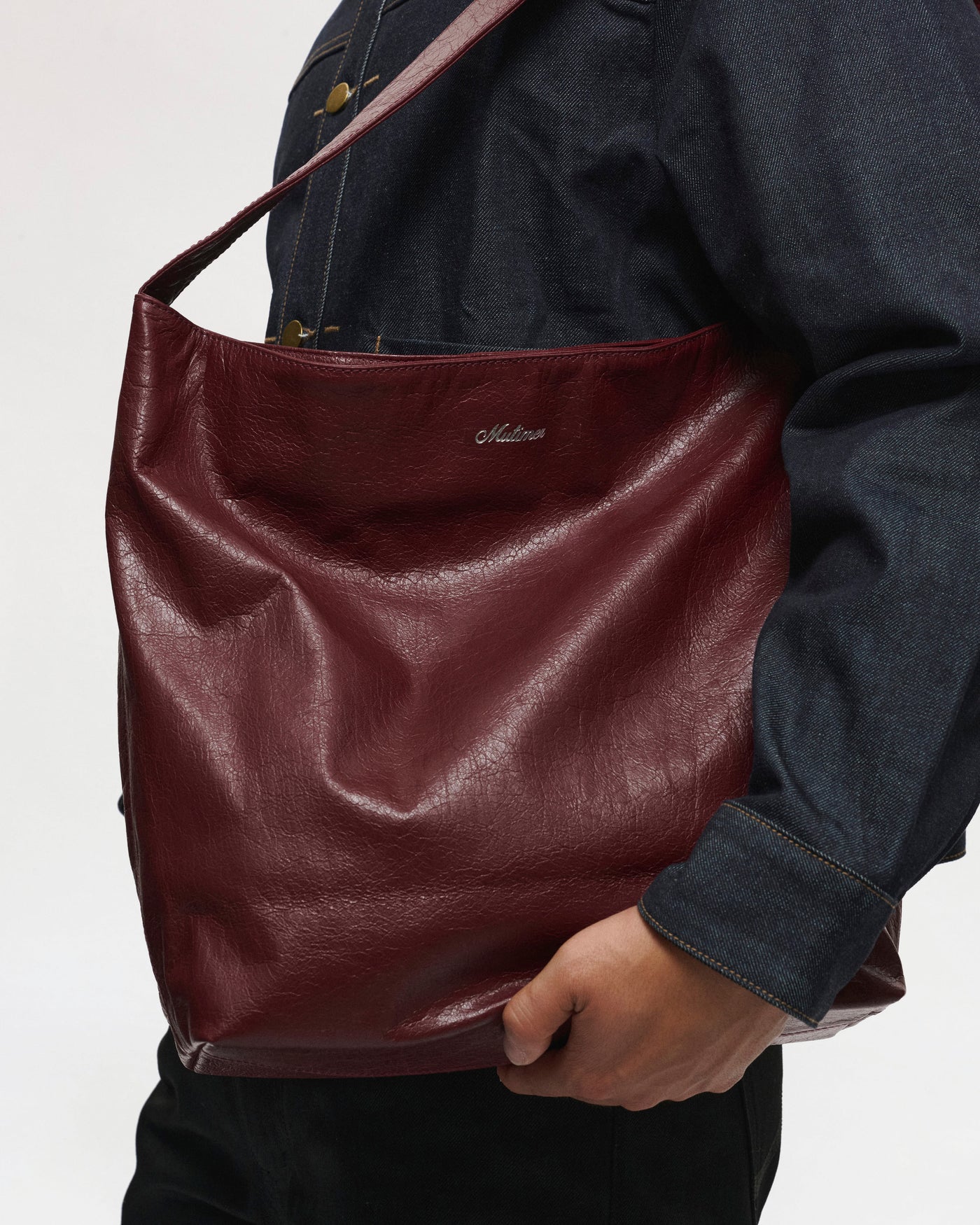
The same standard carries into our luxury leather goods, from the Cowhide Belt to our Leather Outlaw Wallets and Leather Carry bags. They are smaller pieces, but the mantra is identical: quality construction and enduring silhouettes.
What is the difference between genuine leather and full grain leather?
Genuine leather simply means that it is real leather, and the term can be applied to any level of quality, so many brands use it to hide a lower grade. In most cases it is a finished split leather, coated with a polymer to mimic a natural grain, which makes it less durable and more prone to peeling or cracking over time. Full grain is the opposite: nothing has altered the outermost layer, so it retains much of its original character and ages far better.
Why doesn't genuine leather last?
In most cases genuine leather is a finished split, where different parts of the hide are coated with a polymer to mimic the look of a natural grain. That coating is what makes it considerably less durable and more prone to peeling or cracking over time. It also cannot develop the natural patina that high quality leathers do, so it tends to wear out rather than wear in.
What is the difference between chrome tanned and vegetable tanned leather?
Chrome tanning uses a chromium solution to prevent the natural decay of the hide, which results in a lighter, more supple leather with higher heat and water resistance that is easier to dye. Vegetable tanning uses natural tannins from things like tree bark and leaves over several weeks, which leaves the leather stiffer and less water resistant, but allows the natural patina to be more exaggerated as you wear it. Most of our leather is chrome tanned for its durability and consistent colour.
Do leather jackets develop a patina?
Most of our jackets don't develop a drastic colour patina in the way raw denim does. What they develop instead is character through creasing, the fold lines across the elbows, the break at the waist, the marks that come from being worn rather than stored. The Linea is the exception in our range, as its finish shifts slightly over time.
How do you care for a leather jacket?
Leather asks for less maintenance than people expect, and over treating it does more harm than good. For regular full grain, spot cleaning with a wet cloth works for most light marks, and if the spot calls for more, move to a dedicated leather cleaner. Store it hung so it holds its shape, in a well aired space away from direct sunlight, and avoid damp, closed off storage.